Shower grout is not designed to last forever. If you observe cracks, dark patches, or crumbled sections upon touch, this signals an urgent issue that needs addressing. These signs are clear indicators that your grout is approaching the end of its functional life and requires immediate intervention to prevent extensive damage to your shower area.
The silver lining is that regrouting your shower is one of the most straightforward solutions for homeowners grappling with this problem. There’s no need to go through the hassle of removing tiles or undertaking a full bathroom renovation. Instead, you can simply remove the old, damaged grout and replace it with fresh, new grout, effectively restoring the integrity and aesthetics of your shower space.
To effectively maintain your shower, it is crucial to understand the typical lifespan of grout as well as the various factors that can influence its durability. Gaining insight into these elements will empower you to take proactive measures to extend its lifespan and ensure your shower remains in optimal condition for years to come.
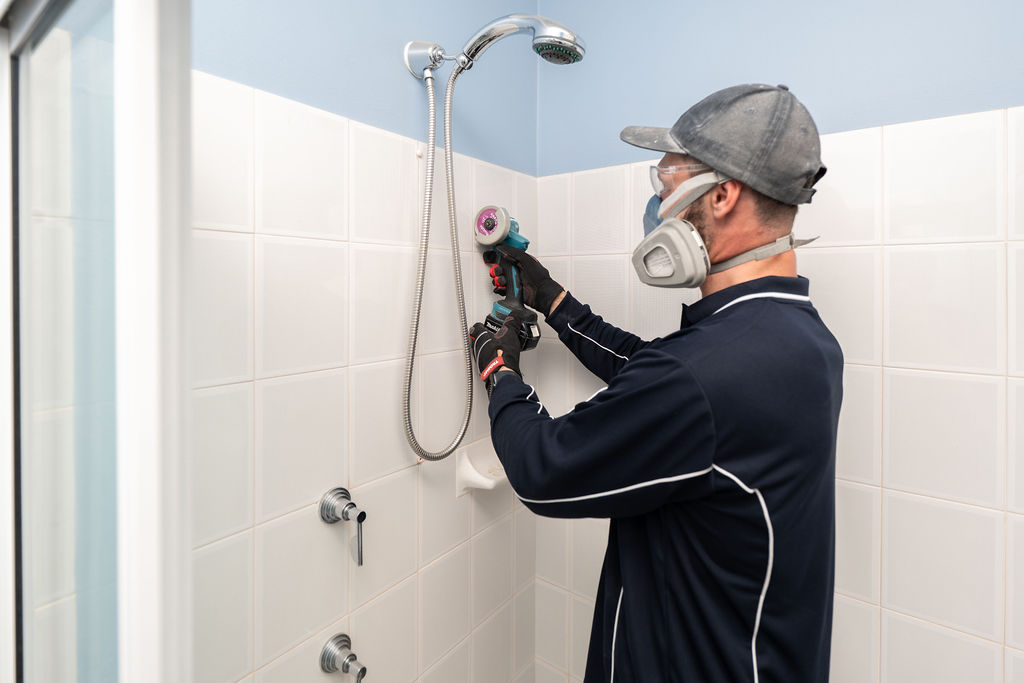
Mastering the Shower Regrouting Process for Long-Lasting Results
Regrouting is exactly what it sounds like: the old grout nestled between your tiles is carefully removed and replaced with new grout. This essential process is critical for maintaining the effectiveness of your shower and preventing leaks.
Over time, grout can deteriorate due to a variety of factors. Moisture seeps into the grout, causing cracks, mould growth, and ultimately leading to its failure to contain water within the shower area, which prevents leaks from occurring behind your tiles.
A thorough regrouting process involves completely removing the old grout, thoroughly cleaning the joints, and applying new grout that bonds effectively. When completed correctly, this technique seals everything effectively without disturbing the tiles, ensuring a long-lasting solution for your shower.
Regrouting should not be confused with a renovation; rather, it is a necessary maintenance step. Moreover, addressing the issue promptly proves to be significantly more cost-effective than allowing it to worsen over time, which could lead to more extensive repairs.
What is the Expected Lifespan of Regrouting in Your Shower?
The reality is that a well-executed regrouting job, when performed with care, should last anywhere from 8 to 15 years. This duration can vary significantly based on several influencing factors, which will be explored in detail shortly.
It is essential to clarify that anyone claiming that regrouting lasts indefinitely is not providing accurate information. In a wet environment, nothing remains intact forever. Grout is constantly exposed to moisture, heat, cleaning chemicals, and the demands of daily use, which will inevitably lead to its gradual decline over time.
The dominant factor here is proper execution. A rushed job that employs inferior grout may lead to problems arising within just a couple of years. Conversely, a meticulous regrouting job that utilises high-quality materials can easily provide durability exceeding a decade under most conditions.
What Influences the Lifespan of Your Shower’s Regrouting?
Not every regrouting job is equal. Various factors can explain why some regrouting efforts last longer than others.
Understanding the Importance of Grout Quality
There is a significant difference in quality among various types of grout. The lower-cost options available at hardware stores cannot compare to professional-grade products. Higher-quality grout varieties exhibit enhanced flexibility, superior water resistance, and are better equipped to endure wear and tear. Epoxy-based grouts, while pricier and requiring careful application, offer remarkable durability compared to standard cement grouts.
How Does Shower Usage Frequency Affect Grout Durability?
A shower used multiple times a day by a large family will experience grout wear much more rapidly than a guest bathroom that sees infrequent use. Increased exposure to moisture leads to accelerated grout degradation—a basic principle of physics at work within your bathroom environment.
Why Is Proper Ventilation Crucial for Grout Longevity?
This critical aspect is often overlooked. Bathrooms that lack adequate ventilation—such as those without an exhaust fan, windows, or with a malfunctioning fan—tend to retain moisture on the grout for extended periods after each shower. This situation accelerates the deterioration of the grout and promotes mould growth, which can gradually damage the grout over time.
If you notice that your grout continues to develop mould despite thorough cleaning efforts, inadequate ventilation is likely the root cause of the issue.
Understanding the Impact of Water Pressure on Grout
High water pressure can force water into tiny gaps and hairline fractures that normal pressure would not impact. If your water pressure tends to be elevated, it places additional stress on the grout joints over time, leading to premature wear and potential failure.
How Do Cleaning Products Affect Grout Longevity?
Harsh chemical cleaners can cause significant damage to grout. Products containing bleach can strip the grout’s surface, while acidic cleaners may erode it. If strong chemicals are part of your regular cleaning routine, you are likely diminishing your grout’s lifespan. A gentle bathroom cleaner paired with a soft brush typically suffices for maintaining your grout without causing harm.
Evaluating the Quality of the Original Grout Installation
This factor is arguably the most critical of all. If the previous grout was not entirely removed before regrouting, the new grout will struggle to bond effectively. Similarly, if the joints were not properly cleaned and dried before applying new grout, issues will undoubtedly arise. A professional regrouting process demands time and meticulous attention to detail, as the preparation phase is just as important as the quality of the grout itself.
How to Identify When Your Grout Requires Replacement
You do not need to guess. Here are the clear signs that indicate it is time for a regrout:
- Cracking or crumbling grout—if pieces fall out upon touch, it is time for replacement.
- Grout that has darkened or discoloured and remains stained despite your best cleaning efforts.
- Mould appearing in the grout lines that persists even after cleaning attempts.
- Visible gaps between tiles where grout has shrunk or detached.
- Water penetrating behind tiles—if the tiles feel loose or you notice damp patches on the wall, this indicates water intrusion.
- A persistent musty odour in the bathroom that won’t dissipate—this is a sign of trapped moisture.
If you observe one or two of these indicators, a regrout can likely resolve the issue effectively. However, if all of these signs are present, it is prudent to have a professional assess the situation behind the tiles to prevent further complications.
Clarifying the Difference Between Regrouting and Resealing
These terms are often confused, but they refer to distinct processes.
Regrouting involves replacing the grout between tiles, the hard filler that occupies the joints.
Resealing pertains to replacing the silicone sealant, the flexible material located where the shower tray meets the wall, where tiles meet the bath, or around fixtures. Silicone is designed to flex with movement, while grout remains rigid.
Both processes can fail, leading to potential water ingress. Often, a leaking shower requires both regrouting in the tile joints and resealing in the movement joints. These two methods work together and complement one another.
If someone carries out only the regrouting while neglecting deteriorated silicone (or vice versa), a water entry point remains unresolved, potentially leading to significant issues.
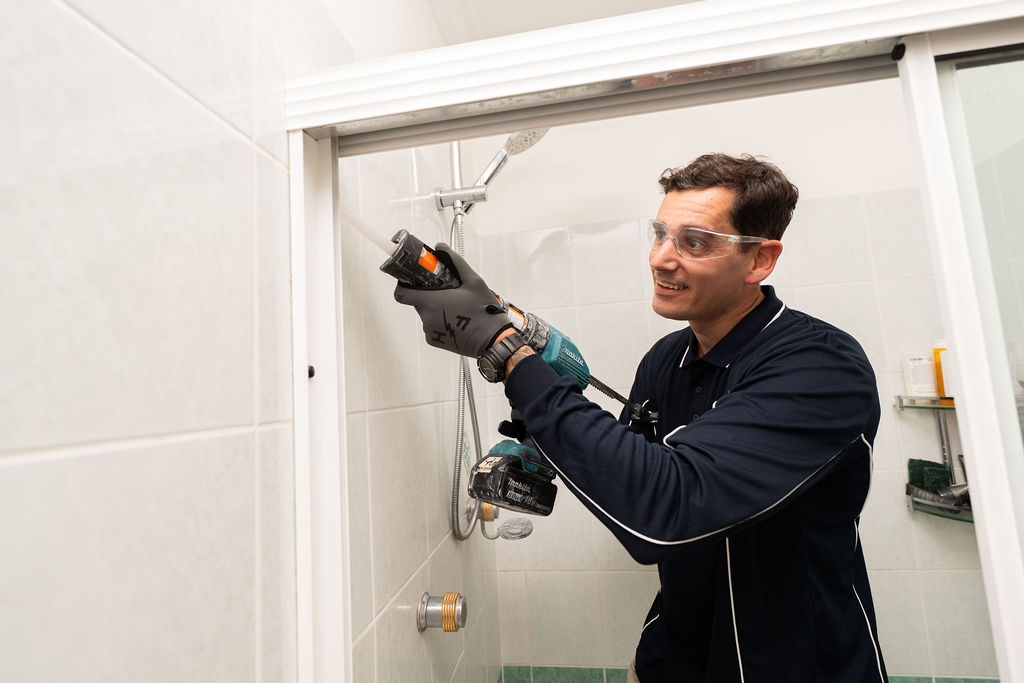
Recognising When Regrouting Alone Isn’t Enough to Solve the Problem
At times, the issue extends beyond just the grout itself.
If water has infiltrated behind the tiles for an extended period—potentially months or even years—it may have compromised the waterproofing membrane underneath. This membrane plays a crucial role in preventing water from entering the wall cavity and the structure of your home.
If this membrane has failed, merely regrouting will not resolve the underlying issue. Water will continue to breach the surface, even with fresh grout applied on top.
Signs that indicate a membrane issue include:
- Ongoing dampness on the wall outside the shower area.
- Swelling or bubbling paint in adjacent rooms.
- Loose tiles or tiles that sound hollow when tapped.
- Water pooling on the floor below (especially if the shower is located upstairs).
It is essential to address these concerns promptly. Investing in a $1400-$2600 regrout now is far more economical than facing a much larger waterproofing job later, particularly if water has been allowed to accumulate behind your tiles for an extended period without intervention.
Essential Insights About Regrouting for Homeowners
A well-executed regrouting job can deliver years of effective service. It stands as one of the most cost-effective solutions to remedy a leaking or ageing shower without requiring a complete overhaul.
However, it is crucial to remember that it is not a “set it and forget it” solution. Regular monitoring is vital for ongoing success. Ensure your bathroom is well-ventilated, avoid excessive use of harsh chemicals, and promptly address any cracks or signs of wear as they arise.
If you are uncertain whether your shower requires regrouting, resealing, or another solution, it is wise to seek a professional evaluation. A quick inspection can clarify your situation and outline the associated costs to rectify any issues effectively.
Common Inquiries About the Regrouting Process
What is the typical cost of shower regrouting in Sydney?
The cost can vary based on the size of the shower and the condition of the existing grout. As a general guideline, expect to pay a minimum of $400 for a standard shower regrout. If silicone work or additional repairs are necessary, the overall cost will increase. For an accurate figure, please contact us for a tailored assessment of your specific shower.
Is it practical to regrout my shower myself?
While it is possible to purchase grout from a hardware store and attempt a DIY job, many such regrouts fail prematurely. This often occurs because the old grout was not completely removed, the joints weren’t adequately cleaned, or the incorrect type of grout was used. If your shower is leaking, a failed DIY attempt will allow water to continue infiltrating, leading to further complications.
How long should I wait before using the shower after regrouting?
Generally, you should wait for 24 to 48 hours. Grout requires sufficient time to cure before being exposed to water. Rushing this process and using the shower too soon is one of the quickest ways to ruin a freshly completed regrout.
Will regrouting resolve a leaking shower?
If the leak is due to failed grout, then yes, regrouting effectively removes the water entry point. However, if the waterproofing membrane behind the tiles has also failed, regrouting alone will not fully rectify the leak. This is why a thorough assessment is crucial rather than relying on assumptions.
Is regrouting the same as retiling?
No, regrouting involves replacing the grout between existing tiles while keeping the tiles themselves in place. Retiling, on the other hand, entails removing tiles and installing new ones, which is a significantly larger and more costly task. In most instances, the tiles are still in good condition; it is primarily the grout that requires attention.
How can I determine if my shower requires regrouting or waterproofing?
If you notice cracked or missing grout and observe water where it shouldn’t be, begin with a professional inspection. A qualified expert can identify whether the issue lies with the grout, silicone, membrane, or a combination of these factors. This way, you can effectively address the right problem the first time, avoiding unnecessary expenses.
Original Article First Published At: How Long Does Shower Regrouting Actually Last?
The Article: Shower Regrouting: How Long Will It Last? first appeared on https://writebuff.com
The Article Shower Regrouting Longevity: How Long Will It Last? Was Found On https://limitsofstrategy.com
The Article Shower Regrouting Longevity: Duration and Care Tips found first on https://electroquench.com